Allahabad to Prayagraj: Should name changing be done at all?
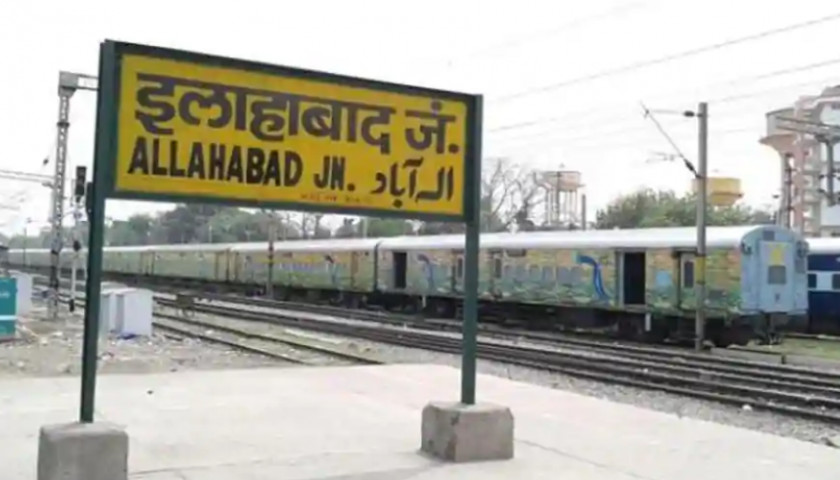
The recent move of Yogi government to change the name of the Allahabad city to Prayagraj has divided the public opinion. Those who support this name changing argue that it is the right decision to bring back the original name of the city, whose name was actually changed Akbar centuries ago. Akbar had changed the name of Prayag into Ilahabas, which means the place of worship, which was subsequently changed to Allahabad Mughal emperor Shah Jahan.
There are people who view this decision as populist agenda being carried out with political and religious motives, keeping in mind the next general election. There are some apprehensions that Yogi government is trying to erase the Mughal history from Indian history. Since the word Allahabad has the word ‘Allah’ in it, therefore, it is being said that changing the name of the city has deep underlying religious motives to alienate the Muslims.
It is not for the first time that the name of a city has been changed. There are many cities in India whose names have been changed at the various points in time the different governments. But the question that need to be addressed is: Should this name changing be done at all?
To address the question as to whether the names of cities or historical places be changed at all, given the fact that merely changing the name doesn’t change the condition of the city on the ground; the context and reasons behind every name changing of a city, place, railway station or any building should be analyzed in a distinct manner. Because in some of the cases the name change could have some valid and concrete reasons, while in other cases it may be merely an exercise in waste with many negative long-term social, political and religious implications.
Ironically despite seven decades of independence some of the cities, places or junctions are named after those tyrant rulers or colonizers who oppressed the people of India. A few days back, one of my friends told me that in his hometown Patna there is a railway station which has been named after the cruel invader Bakhtiar Khilji, who burned the Nalanda University. In such scenario, naming the city or place after somebody from our own country who has some contribution to this nation is justifiable. There is no point in valorizing a person naming a place after him who was the very cause of destruction of its people.
Having said that, the biggest problem with the name changing, apart from the expenses and inconvenience it causes in the transition from the old name to new name, is the politicization of this issue, which unfortunately is done adding some religious colour to the matter to score some electoral points. It also applies in the case of Allahabad.
If the intentions of the government is to only restore the original name of the city, I don’t have much problem with that, in fact none except for the apprehensions about such moves fostering a culture of name changing the government in the future, as per what suits best to the ideology of ruling party, rather than working on the key and pressing issues of development. But, if the intentions of the government are to sort of ostensibly promote religious domination or to cover up the failures of the government, then there could be nothing more betraying and disgusting.

Currently, I am pursuing B.A(H) Political science from Satyawati College, Delhi University.
I like public speaking, writing and reading in my leisure.