

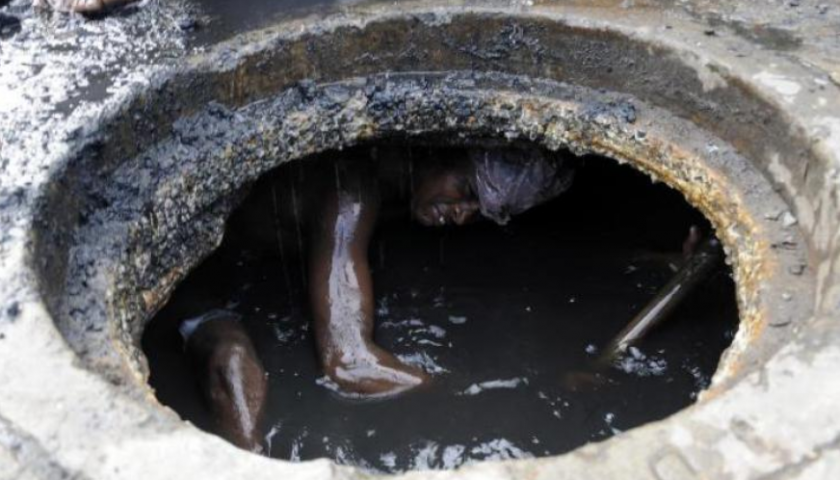
“Swacch Bharat Abhiyan” vs the ironic practice of Manual Scavenging.
As India will celebrate the 150th birth anniversary of Mahatma Gandhi, which will also mark the completion of 5 years of “Swacch Bharat Abhiyan” in 2019, it’s very ironic that some people, particularly Dalits, continue to die while doing the task of manual scavenging across the country.
According to an official data provided the National Commission for Safai Karmachari (NCSK), a statutory body set up The Prohibition of Employment as Manual Scavengers and their Rehabilitation Act, 2013, one person has died every five days on an average since January 1, 2017.
The issue of manual scavenging came into the spotlight after five people died due to manual scavenging in the national capital last week. Despite the law being into the existence which forbids the employment of any person for the task of manual scavenging any agency or individual and mandates their rehabilitation providing financial support, nothing seems to have changed on the ground level when it comes to this suppressive and inhumane practice of manual scavenging.
Though the law makes it mandatory for the employers to provide the safety gears and other best suitable equipment to the those who are assigned the task of cleaning the septic tanks, yet the news of deaths of people while doing manual scavenging clearly reflects the world of difference between the prescription and execution of the law.
This problem of manual scavenging gets even exacerbating when it becomes an instrument of the suppression of the historically marginalized section of the society at the hands of dominant upper caste people. In many parts of rural India, the people from the Dalit community have been primarily doing the task of removing the human excreta from the upper caste people’s latrines their own hands for many years, making them prone to be the victim of several viral and bacterial diseases.
A society can’t be called just and equal if the people, no matter however minuscule they might be in numbers, continue to be put through such inhumane task of manual scavenging with the risk of life and social humiliation. The failure of the laws in abolishing this practice and ensuring the safety of those cleaning the sewage and septic tanks exposes the inability of the concerned authorities to ineffectively implement the law.
Amongst many reasons cited for the continuation of manual scavenging, the lack of education and unawareness about the laws amongst those who are employed is a very prominent factor that helps in legitimising and normalising this practice. Therefore, there is a need for sensitisation and proper social awareness programmes amongst both the employers and the ones who do this task.

Currently, I am pursuing B.A(H) Political science from Satyawati College, Delhi University.
I like public speaking, writing and reading in my leisure.


